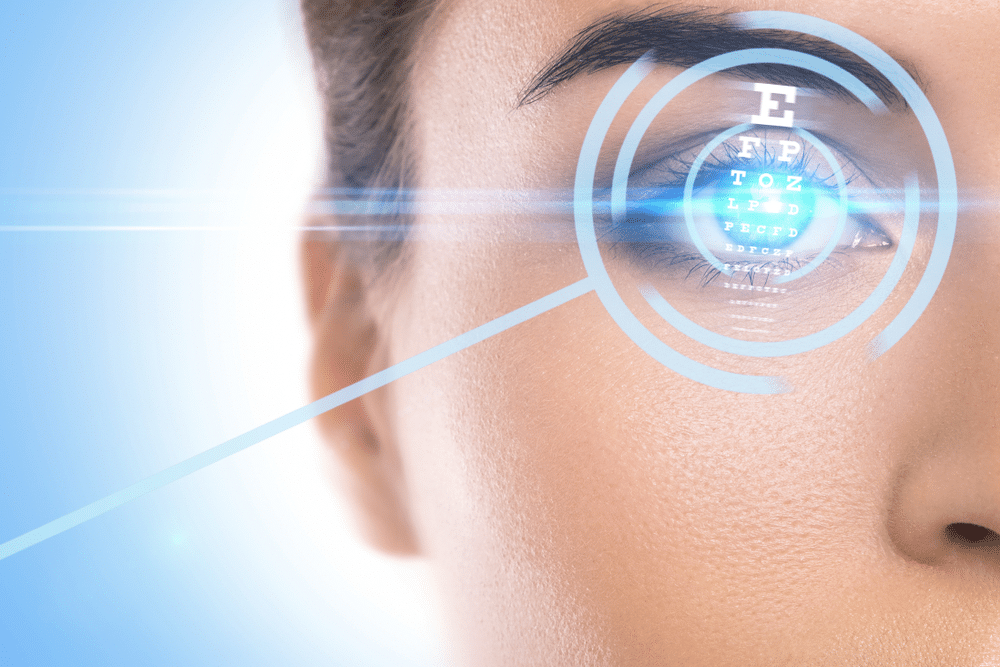
LASIK uses a specialized laser to reshape the cornea and correct common vision problems. Many people who choose LASIK are able to significantly reduce or eliminate their reliance on eyeglasses or contact lenses.
At Holly Springs Eye & Laser, LASIK is performed by Dr. Faraaz Khan, a board-certified and fellowship-trained ophthalmologist with deep experience in laser vision correction. For individuals looking to reduce dependence on glasses or contacts, LASIK may be an appropriate option to consider.
How much does Vision Correction Cost?
Glasses and contacts can cost far more than most people realize over time — especially when you add in exams, prescriptions, and contact lens supplies. While they help you see clearly, they don’t change your underlying prescription. LASIK is a one-time investment designed to reduce your dependence on corrective lenses for years to come. Use our affordability calculator to estimate what you could spend over time — and what it could look like to put that money toward a clearer vision.
Lifetime cost of visual aids
Vision correction is only
$5,000Benefits of LASIK
LASIK is a precise procedure that uses a specialized laser to reshape the cornea. By adjusting the curvature of the cornea, light can enter the eye at the correct angle and focus more accurately on the retina. This correction addresses the underlying cause of blurry or distorted vision.
Potential benefits of LASIK may include:
LASIK is commonly chosen to address a range of refractive vision issues. If you have questions, an evaluation can help determine whether LASIK is an appropriate option.
Vision Problems LASIK Can Treat
LASIK is commonly used to correct these refractive errors:
A comprehensive evaluation of eye health and vision needs helps determine whether LASIK is an appropriate option. In some cases, other treatments may be more suitable, such as cataract surgery for age-related changes in the natural lens.
LASIK vs PRK: Understanding the Difference
LASIK and PRK both reshape the cornea and improve how light focuses on the retina. While the goal of both procedures is similar, the techniques used during treatment differ.
LASIK involves creating a thin flap in the cornea so the laser can reshape the underlying tissue. After the cornea is adjusted, the flap is repositioned. This approach often allows for faster visual recovery for many patients.
PRK doesn’t require a corneal flap. It involves removing the outermost layer of corneal tissue and then reshaping the cornea. Because PRK removes more tissue, the eye heals differently afterward, and visual recovery may take longer compared with LASIK.
Both LASIK and PRK can treat refractive errors such as nearsightedness, farsightedness, and astigmatism. The best option depends on factors such as corneal thickness, eye health, and individual lifestyle considerations. A detailed evaluation helps determine which procedure may be the best fit.
Why Choose Us for LASIK
Patients choose Holly Springs Eye & Laser for LASIK because of a focus on advanced technology and surgical expertise. Dr. Khan has extensive experience in corneal and refractive surgery and personally performs each LASIK procedure, rather than relying on rotating or visiting surgeons.
Care is structured to provide consistent evaluation, clear communication, and appropriate follow-up throughout the LASIK process. With locations in Holly Springs and Fayetteville, treatment is delivered in a setting designed to support accurate assessment and continuity of care from consultation through recovery.
Schedule a consultation to find out if WaveLight LASIK or PRK is the best fit for your eyes and lifestyle.
FAQs – LASIK
At what age can someone have LASIK?
LASIK is for adults whose vision has stabilized. Many candidates are in their 20s or older, but age alone does not determine eligibility. A pre-LASIK eye exam helps evaluate prescription stability, eye health, and whether laser vision correction may be appropriate.
Do I need to stop wearing contacts before a LASIK evaluation?
Contact lenses can temporarily change the shape of the cornea. Because LASIK planning depends on precise measurements, patients are often asked to stop wearing contact lenses for a period of time before their evaluation. This allows the cornea to resume its natural shape, making measurements more accurate.
What if I am not a candidate for LASIK?
Some people may not be ideal candidates for LASIK because of thin corneas, very high prescription levels, or chronic eye conditions. In these situations, other vision correction options, such as PRK or cataract surgery, may be an option.
Will I still need reading glasses after LASIK?
LASIK corrects refractive errors, including myopia (nearsightedness), hyperopia (farsightedness), and astigmatism. However, age-related changes in near vision (presbyopia) can still occur later in life, usually around age 40-45. LASIK doesn’t correct presbyopia, so most adults eventually need reading glasses as part of the natural aging process, even if they previously had LASIK.
Schedule a LASIK Consultation
If you’re interested in learning whether LASIK is an appropriate option, an evaluation can help determine next steps. To schedule an appointment, call Holly Springs Eye & Laser at 919-689-8920 or book a consultation online.
We welcome patients from all surrounding areas, including Angier, Apex, Buies Creek, Carrboro, Cary, Chapel Hill, Clayton, Coats, Dunn, Durham, Eastover, Erwin, Fayetteville, Fuquay-Varina, Garner, Holly Springs, Hope Mills, Knightdale, Laurinburg, Lillington, Linden, Lumberton, Morrisville, New Hill, Pinehurst, Pittsboro, Raleigh, Raeford, Rockingham, Sanford, Smithfield, Southern Pines, Spring Lake, Stedman, Varina, Vander, Wake Forest, Wendell, Willow Spring, and Zebulon.